Blog
Is L-Arginine Safe Long Term? What 3 Months of Data Leaves Open
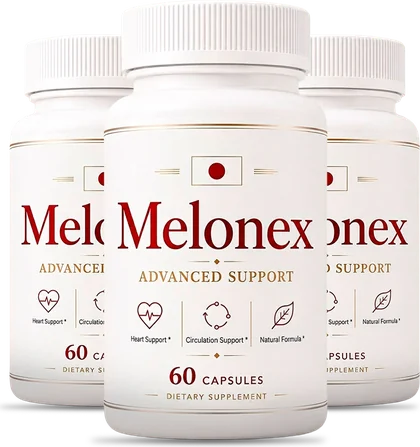
Is L-arginine safe long term? Nobody can say yet. The NIH Office of Dietary Supplements reports that up to 9 g a day looked well tolerated for weeks, but safety at high doses beyond 3 months is not known. Melonex holds a 500 mg blend per capsule, far less, and no trial tested it.
Written by the Melonexcare editorsUpdated · 4 min read
No. 01The short answer
Is L-arginine safe long term?
Is L-arginine safe long term? The honest answer is that the research has not run long enough to tell us.
The NIH Office of Dietary Supplements says up to 9 g a day for several days or weeks looked safe and well tolerated. It also says the safety of high doses beyond 3 months is not known (NIH ODS, arginine and citrulline).
So a quiet record is not the same as a clean record. Most studies simply stopped before the long stretch began.
A car that drove well for three months has not yet been proven for ten years. The same logic applies here.
No. 02What was tested
How long have people actually taken arginine?
Most trials of arginine ran for weeks or a few months, at gram doses far above what one Melonex capsule can hold.
In 11 blood pressure trials with 387 people, oral L-arginine was given at 4 to 24 g a day (Dong 2011, arginine and BP). At 9 to 30 g a day, the NIH lists stomach upset, diarrhea and nausea as the usual complaints (NIH ODS, arginine and citrulline).
Those are the numbers to hold next to a label. A capsule is measured in hundreds of milligrams, not grams.
| Question | What the source says |
|---|---|
| Weeks at up to 9 g a day | Appeared safe and well tolerated (NIH ODS, arginine and citrulline) |
| 9 to 30 g a day | Stomach upset, diarrhea, nausea (NIH ODS, arginine and citrulline) |
| High doses past 3 months | Not known (NIH ODS, arginine and citrulline) |
| Blood pressure trials | 4 to 24 g a day, 11 trials (Dong 2011, arginine and BP) |
No. 03Your capsule
What amount of arginine is in one Melonex capsule?
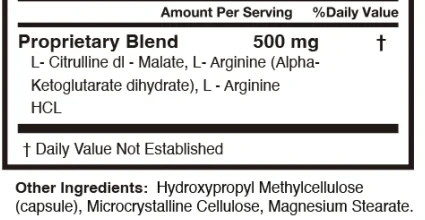
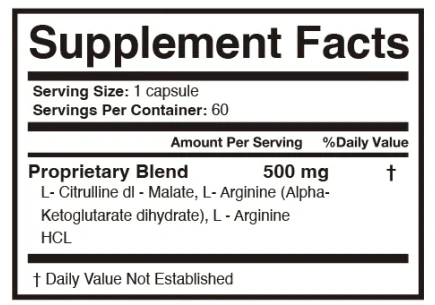
The label does not say, but it caps the answer: the whole blend is 500 mg, and arginine takes up only part of it.
Arginine appears twice, as arginine alpha-ketoglutarate and as arginine HCl. Under the 21 CFR 101.36 rule, the second place holds at most 250 mg and the third at most 167 mg (21 CFR 101.36).
Those are salt weights, so the pure amino acid is less. Even at the label's top of two capsules, the full blend is 1,000 mg, about one ninth of 9 g.
| Label line | Place | 1 capsule | 2 capsules (label max) | Amount used in research | Evidence |
|---|---|---|---|---|---|
| L-Citrulline DL-Malate | 1 of 3 | at most 500 mg | at most 1,000 mg | 3-9 g a day of L-citrulline in blood pressure trials (1-17 weeks) (Barkhidarian 2019, citrulline and BP) (NIH ODS, arginine and citrulline) (RxList, L-citrulline) | Small systolic drop in short, small trials; no trial of Melonex |
| L-Arginine (Alpha-Ketoglutarate dihydrate) | 2 of 3 | at most 250 mg | at most 500 mg | 4-24 g a day of L-arginine in blood pressure trials (Dong 2011, arginine and BP) (Mayo Clinic, L-arginine) (RxList, alpha-ketoglutarate) | Small drops in blood pressure in trials of grams a day; no trial of Melonex |
| L-Arginine HCL | 3 of 3 | at most 167 mg | at most 333 mg | 4-24 g a day of L-arginine in blood pressure trials (Dong 2011, arginine and BP) (Mayo Clinic, L-arginine) (VINTAGE MI trial (ACC summary)) | Same arginine research; the salt form adds no evidence |
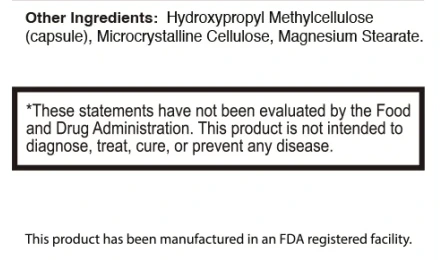
| Hydroxypropyl Methylcellulose (capsule) | Other ingredient | not listed (inactive) | not listed (inactive) | Not a nutrient; it forms the capsule | Inactive ingredient |
| Microcrystalline Cellulose | Other ingredient | not listed (inactive) | not listed (inactive) | Not a nutrient; a filler | Inactive ingredient |
| Magnesium Stearate | Other ingredient | not listed (inactive) | not listed (inactive) | Not a nutrient; a flow agent | Inactive ingredient |
Small does not mean proven for years. It means the open question is smaller, not closed.
No. 04Who should pause
Who should be careful with arginine?
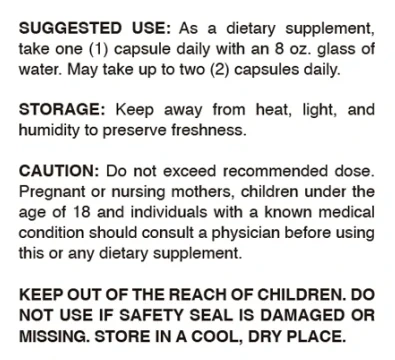
People after a heart attack, people on certain medicines, and anyone pregnant or nursing should ask first.
In the VINTAGE MI trial, 153 adults took 9 g a day for 6 months after a first heart attack. Six died on arginine and none on placebo, and the trial was stopped early (VINTAGE MI trial (ACC summary)). After a recent heart attack, Mayo Clinic advises against arginine (Mayo Clinic, L-arginine).
Mayo also lists blood thinners, blood pressure drugs, nitrates, sildenafil and diabetes medicines as interactions (Mayo Clinic, L-arginine).
- Check with your doctor or pharmacist before starting.
- Bring the bottle and the label to the visit.
- Stop and call your doctor if you feel dizzy, faint or unwell.
No. 05A sensible habit
How can you use a supplement more safely over months?
Check in on a schedule, keep the label, and let your doctor see the whole list.
Tell your care team what you take, and keep taking prescribed medicine, and tell your doctor about any change in how you feel. Natural does not always mean safe.
Set a check-in
Pick day 30 and day 60 on the calendar.
Keep notes
Write down any upset stomach or dizziness.
Review at visits
Show your doctor the bottle. See the side effects page and the heart attack guide.
Each pack is covered by the guarantee, which has conditions, including a restocking fee and sealed bottles only. A 3- or 6-bottle pack is a long commitment, so read it first. For more, see arginine HCl vs AKG.
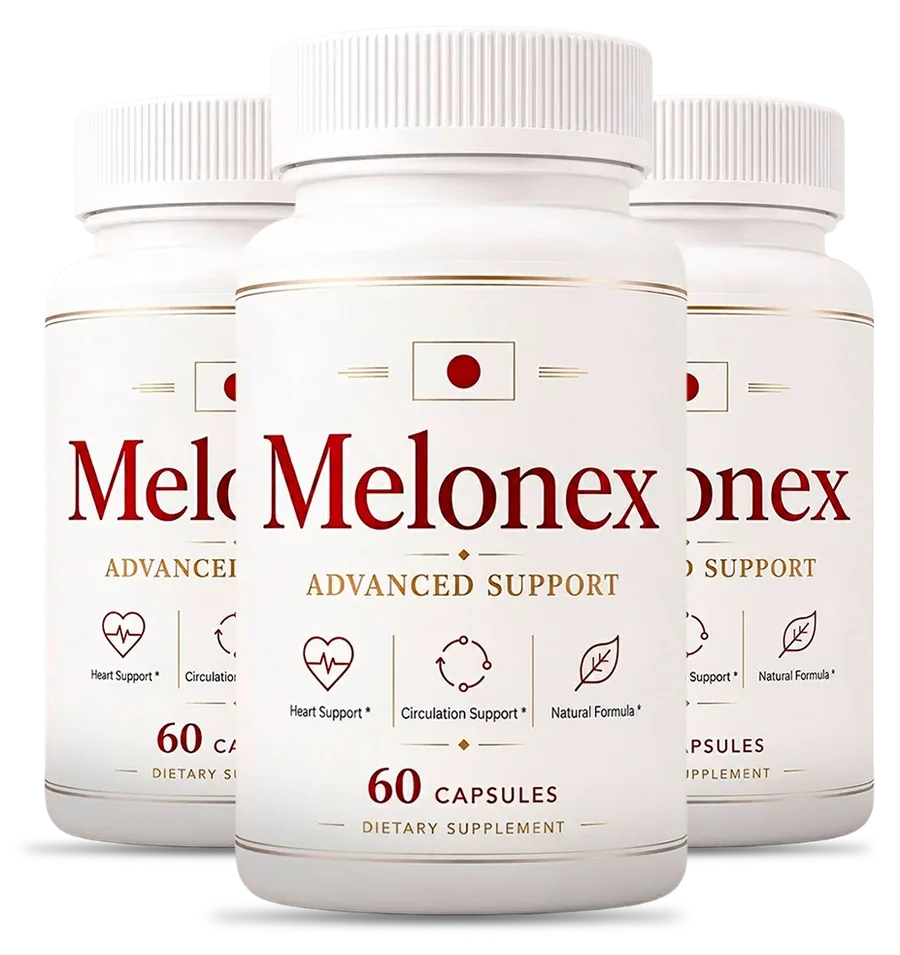
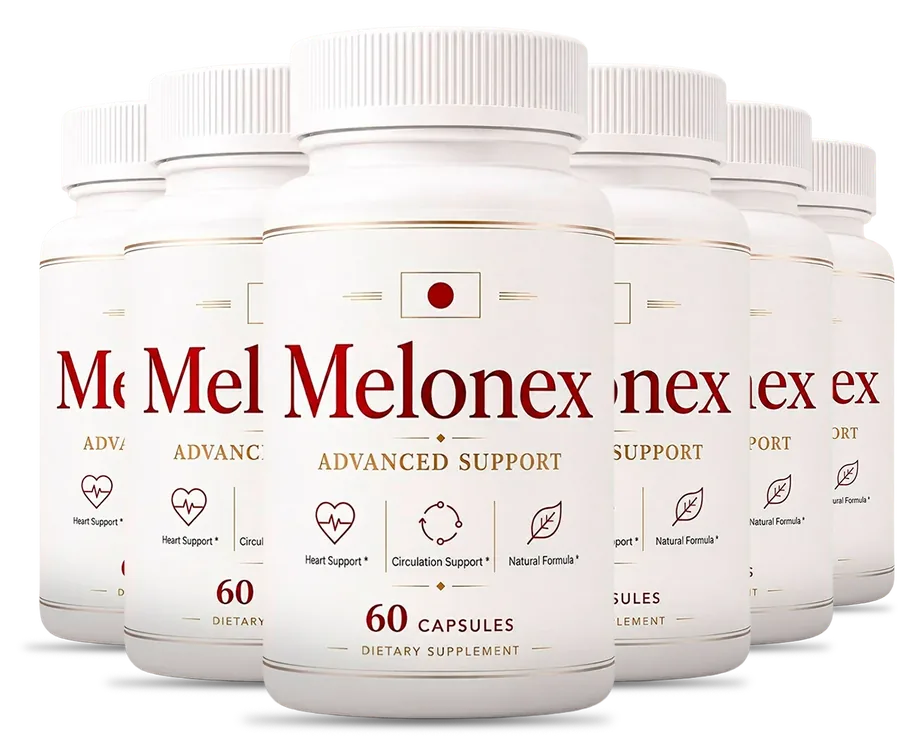
Prices as listed on the seller’s order page, October 19, 2026; confirm at checkout. The 2-bottle kit is $158 plus $9.99 shipping. Check your medicines with your doctor first. 60-day money-back guarantee (seller’s terms).
Melonex is a dietary supplement, not a treatment. Ask your doctor or pharmacist first if you take a nitrate for chest pain, an erectile-dysfunction drug such as sildenafil, any blood pressure medicine, a potassium-sparing diuretic, a blood thinner or a diabetes medicine, or if you have had a heart attack. Arginine and citrulline can push blood pressure down further. Keep taking prescribed medicine. See side effects and interactions.
No. 06FAQ
Melonex questions people ask
Can you take L-arginine every day for years?
Nobody has tested that well. The NIH says safety of high doses past 3 months is not known. If you want to take it daily, ask your doctor or pharmacist first and review it at regular visits.
What are the side effects of L-arginine over time?
Reported effects at high doses are stomach upset, diarrhea, nausea and slightly lower blood pressure. Long-run effects are unknown. Tell your doctor if anything new appears.
Is the arginine in Melonex a high dose?
No. The label lists a 500 mg blend with two arginine lines inside, each capped at 250 mg or 167 mg. Trials used grams a day. No trial tested the capsule itself.
Does arginine harm the kidneys?
We found no source in our reference list that reports that, so we will not claim it. People with kidney or liver problems should ask their provider first, as WebMD advises.
No. 07Who wrote this
Written and reviewed by
Pages built from the bottle label, the seller’s order page and linked NIH, FDA, CDC, AHA, FTC and peer-reviewed sources.
Last updated . Learn about our editorial standards and how we check reviews. This website is run by Melonexcare, which describes itself as an authorized American Melonex outlet. It is not the manufacturer or the label’s distributor. Buying through our order links earns us money.
Related
More from the Melonex blog

Keep reading
More about Melonex
Authorized American Melonex outlet
Ready to start Melonex?
Bring the label to your doctor or pharmacist first, then choose a pack. Six bottles cost the least per bottle, and the seller lists a 60-day money-back guarantee on every kit.
- Secure checkout
- 60-day money-back
- Ships from the U.S.