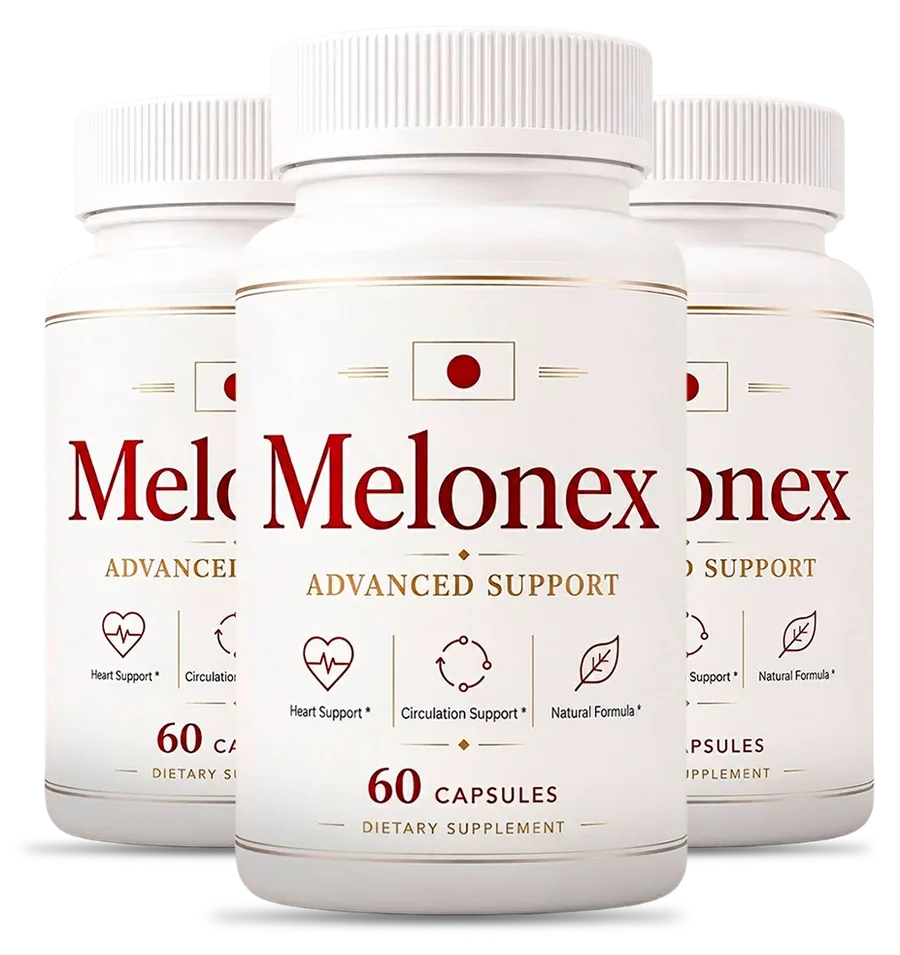
Ingredient profile
What Else Is in a Melonex Capsule?
Melonex capsule ingredients beyond the 500 mg amino acid blend are three inactive ones: hydroxypropyl methylcellulose, which forms the vegetable capsule shell, microcrystalline cellulose, a plant-fiber filler, and magnesium stearate, a flow agent. The label prints no amounts for them and makes no allergen, vegan or gluten statement.
Written by the Melonexcare editorsUpdated
No. 01The short list
What are the Melonex capsule ingredients besides the amino acids?
Besides the 500 mg blend, a Melonex capsule holds three other ingredients: hydroxypropyl methylcellulose, microcrystalline cellulose and magnesium stearate.
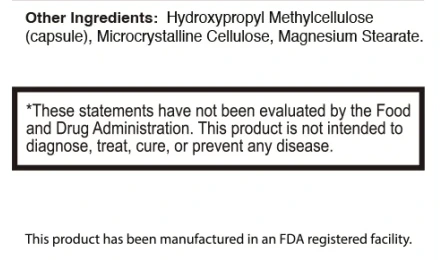
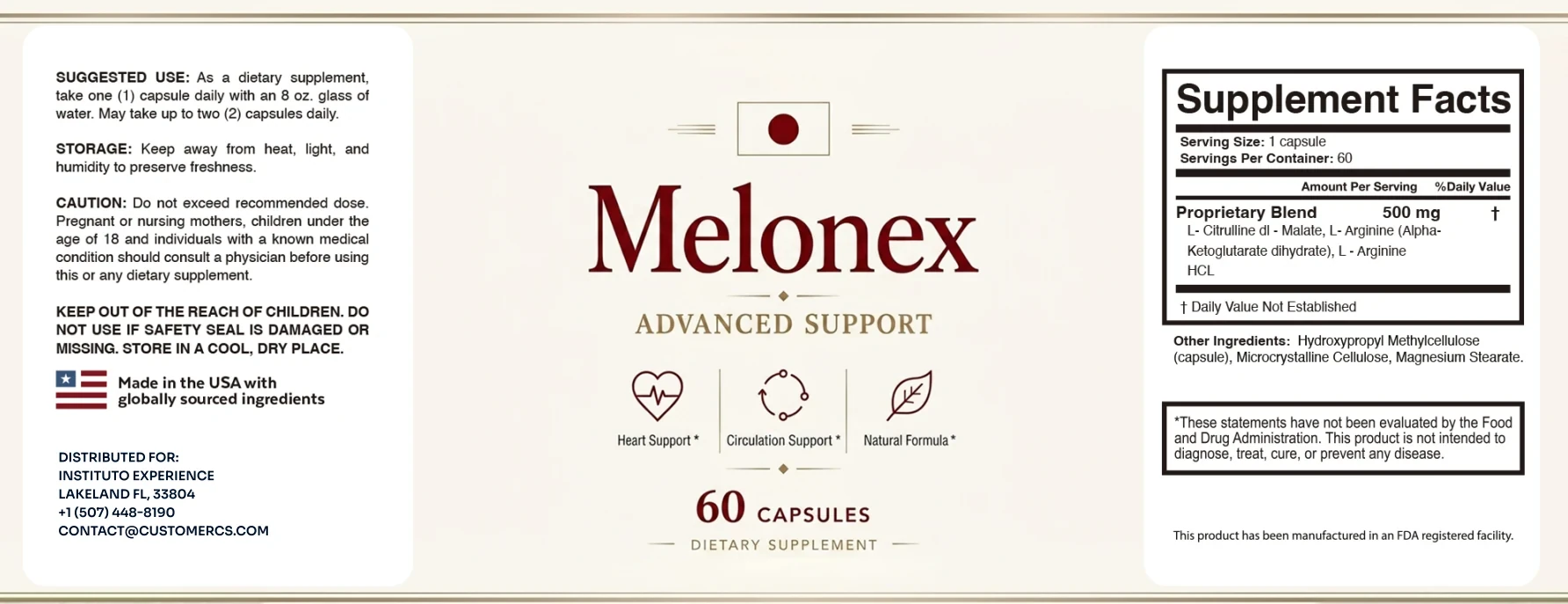
The label prints them under the Supplement Facts panel, on a line that begins with “Other ingredients”. In its own words: Hydroxypropyl Methylcellulose (capsule), Microcrystalline Cellulose, Magnesium Stearate.
Think of the blend as the guest and these three as the dishes it is served in. They are not there to do anything for your heart. They shape the capsule, help the powder flow and keep it easy to swallow.
The label does not print how much of each is inside. That is normal for inactive ingredients. What it does tell you is the order, and for this line the shell comes first.
| On the label | What it is | Its job |
|---|---|---|
| Hydroxypropyl Methylcellulose (capsule) | Plant-cellulose shell | Holds the powder; the “vegetable capsule” |
| Microcrystalline Cellulose | Refined plant cellulose | Filler that bulks the powder |
| Magnesium Stearate | Fatty-acid salt of magnesium | Flow agent for filling machines |
No. 02The shell
What is hydroxypropyl methylcellulose, and is it a vegetable capsule?
Hydroxypropyl methylcellulose, or HPMC, is a plant-cellulose material, and a capsule made from it is what sellers call a vegetable capsule. It is the shell, not an active ingredient.
The label writes it as “Hydroxypropyl Methylcellulose (capsule)”. The word in brackets tells you it is the shell. Cellulose is the fiber in plant cell walls, and HPMC is made by modifying it so it dissolves in the stomach.
Many people choose this kind of shell because it is not made from animal gelatin. We say that carefully. The label never uses the words vegan or vegetarian, so if that matters to you, ask the order desk before you buy.
- It is a shell, so it is not part of the 500 mg blend.
- It is not a nutrient and gives no benefit by itself.
- The label names it first among the other ingredients.
See it on the bottle
This crop shows the other-ingredients line, the FDA statement box and the facility line, as printed.
No. 03The filler
What is microcrystalline cellulose in a capsule?
Microcrystalline cellulose is a refined plant cellulose used as a filler. It adds bulk so a small amount of active powder fills a capsule evenly.
An amino acid blend of 500 mg is a small pinch of powder. Filler gives it volume, so each capsule is filled the same. That is its whole role.
It is the same cellulose family as the shell, but in powder form. The label does not say what plant it came from, and it does not need to. Because it is an inactive ingredient, you will not find a studied dose for it.
Most people never notice it. If you have ever been told to avoid a particular filler, bring that note to your pharmacist along with the bottle.
No. 04The flow agent
What is magnesium stearate, and is it safe?
Magnesium stearate is a flow agent: a fine powder that keeps capsule-filling machines from clogging. It is an inactive ingredient and it is not a magnesium supplement.
Stearate comes from stearic acid, a fatty acid. When joined to magnesium, it becomes a slippery powder. A tiny amount coats the other powders so they pour smoothly.
The label does not say how much is inside or what its source is, plant or animal. We could not verify either point, and we are not going to guess. Our sources do not list a risk at capsule amounts, and neither do we claim any benefit.
Two plain warnings. First, do not count it toward your daily magnesium; the amount is not printed. Second, supplements can still carry risks even when each ingredient sounds gentle, so tell your doctor everything you take (NCCIH, Using supplements wisely).
Nothing on the other-ingredients line is a warning sign by itself. The things worth your attention are the amounts of the blend, the interactions and the heart-attack caution, covered on the side effects page.
No. 05What is not said
What does the Melonex label leave out about its capsule?
The label leaves out four things: the amount of each inactive ingredient, the source of the stearate, any allergen statement and any gluten, vegan or non-GMO statement.
That is not unusual. It does mean you have to ask when a detail matters to you. Reading is half of safe shopping, and asking is the other half.
Allergies
The panel prints no allergen line. If you react to a cellulose, a stearate or a filler, ask a pharmacist before the first capsule.
Vegan or gluten-free
Neither word is on the label. A shell made from plant cellulose is a good sign, but it is not a promise.
The non-GMO badge
The seller shows a GMO free badge. The label makes no GMO statement, and no test is published (more on testing).
Amounts
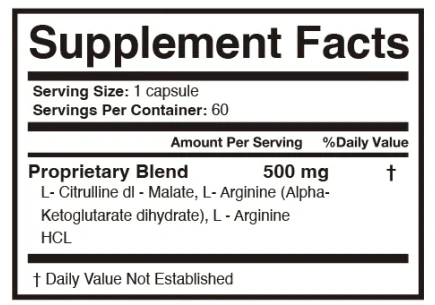
Only the 500 mg blend has a weight. Inactive ingredients are listed without one, and so are the individual amino acids.
The order desk can answer sourcing questions at +1 (855) 889-3137. The seller's order-page email is [email protected]. Ask in writing and keep the reply with your bottle.
No. 06Front of bottle
Where does the vegetable capsule claim come from?
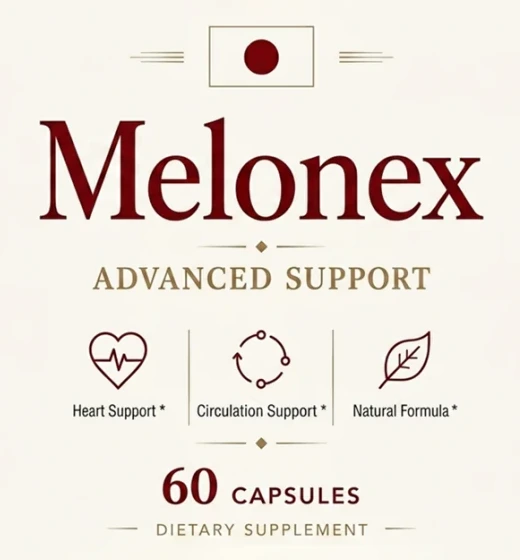
The seller describes Melonex as vegetable capsules, and the label's shell line, hydroxypropyl methylcellulose, matches that description. The front panel itself says only 60 capsules.
The front, as printed, carries the brand name, “ADVANCED SUPPORT”, three stamps and “60 CAPSULES”. Nothing on the front says vegetable, vegan or plant-based. That wording comes from the seller and from the shell material.
Read the full panel word for word on the supplement facts page, and see why the capsule form matters on the capsule page.
No. 07All profiles
What should you read next?
The inactive ingredients are the quietest part of the label. The amino acid lines carry nearly every real question about dose and safety.
Start with the blend arithmetic, then the cautions. If you are comparing sizes, the 60-capsule bottle is 60 days at one capsule a day, and the pricing page shows the packs.
No. 08FAQ
Melonex capsule ingredient questions
What are the inactive ingredients in Melonex?
Melonex lists three: hydroxypropyl methylcellulose (the capsule shell), microcrystalline cellulose and magnesium stearate. The label prints no amount for any of them. They shape and fill the capsule and are not meant to have an effect on the body.
Is Melonex a vegetable capsule?
The shell is hydroxypropyl methylcellulose, a plant-cellulose material, which is what sellers call a vegetable capsule. The label does not use the words vegan or vegetarian, so ask the order desk if that is important to you.
Is magnesium stearate in capsules harmful?
Our sources list no risk at the tiny amounts used in capsules, and the label gives no amount. It is a flow agent, not a magnesium supplement. If you have a known sensitivity, show your pharmacist the bottle first (NCCIH, Using supplements wisely).
What is hydroxypropyl methylcellulose made from?
It is made by modifying cellulose, the fiber in plant cell walls, so it dissolves in the stomach. The label does not name the plant it came from. It forms the shell and is not part of the 500 mg amino acid blend.
Does Melonex contain gluten, soy or other allergens?
With no allergen statement or gluten-free claim on the label, we cannot say. Ask your pharmacist or the order desk at +1 (855) 889-3137 before the first capsule, especially if you have a known allergy.
Are the other ingredients counted in the 500 mg blend?
No. The 500 mg figure is the weight of the three amino acid lines only. The shell, filler and flow agent are listed separately and carry no weight on the panel.
No. 09Who wrote this
Written and reviewed by
Pages built from the bottle label, the seller’s order page and linked NIH, FDA, CDC, AHA, FTC and peer-reviewed sources.
Last updated . Learn about our editorial standards and how we check reviews. This website is run by Melonexcare, which describes itself as an authorized American Melonex outlet. It is not the manufacturer or the label’s distributor. Buying through our order links earns us money.
Keep reading
More about Melonex
Authorized American Melonex outlet
Ready to start Melonex?
Bring the label to your doctor or pharmacist first, then choose a pack. Six bottles cost the least per bottle, and the seller lists a 60-day money-back guarantee on every kit.
- Secure checkout
- 60-day money-back
- Ships from the U.S.